Empowering Beekeepers Through Financial Literacy in the Kwahu Afram Plains
Since 2019, we have been transforming rural livelihoods in the Kwahu Afram Plains through its sustainable beekeeping initiative. Beyond producing honey, this approach empowers communities to restore forests, build income resilience, and improve well-being. Through our hands-on training, participants learn about bee behaviour, hive construction using locally available materials, apiary establishment and management, forest conservation, and […]
Since 2019, we have been transforming rural livelihoods in the Kwahu Afram Plains through its sustainable beekeeping initiative. Beyond producing honey, this approach empowers communities to restore forests, build income resilience, and improve well-being.
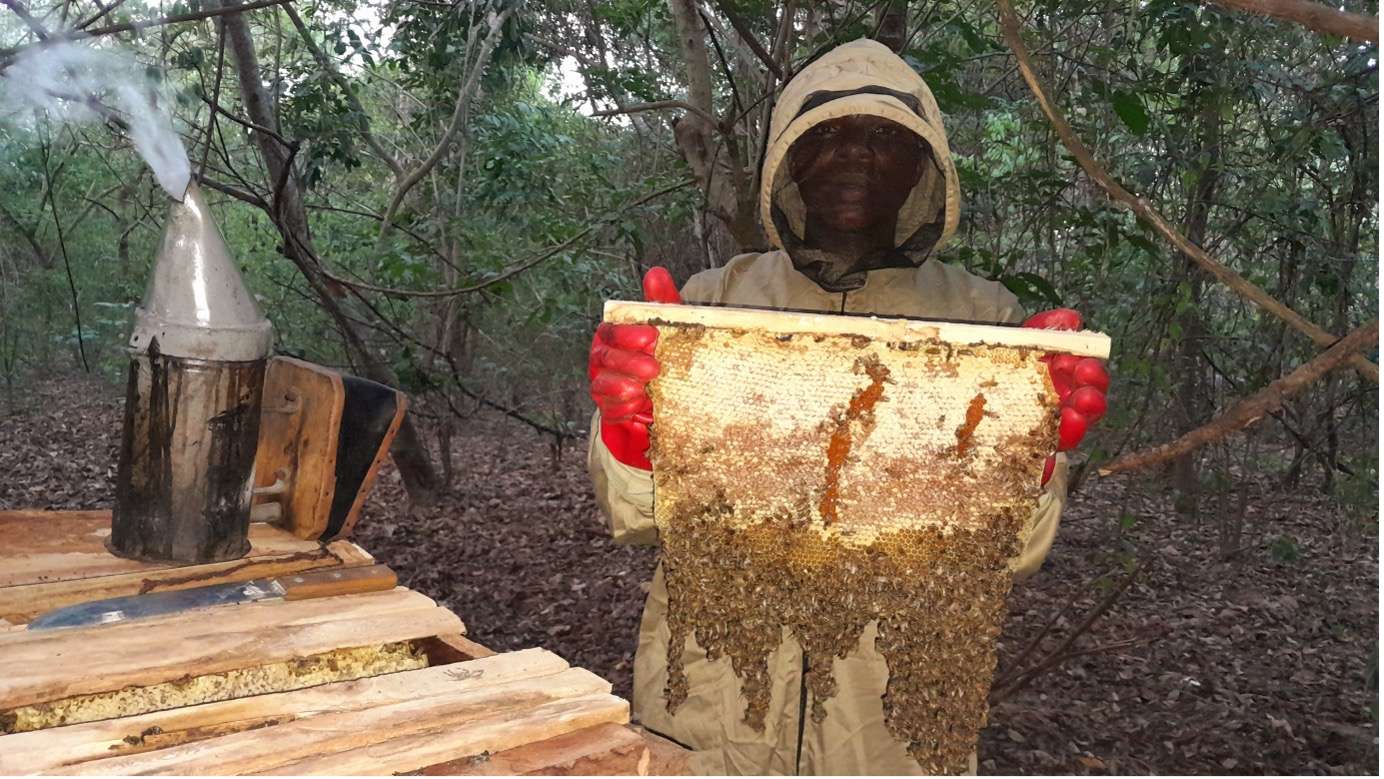
Through our hands-on training, participants learn about bee behaviour, hive construction using locally available materials, apiary establishment and management, forest conservation, and ethical honey harvesting. Beekeepers also receive essential tools such as bee suits, hive tools, smokers, and harvesting buckets to safely manage their colonies.
Importantly, BfDG promotes household and community-level beekeeping to ensure knowledge transfer between generations. Gender inclusion remains central to this mission — women are empowered to practice beekeeping as a main or alternative livelihood source.
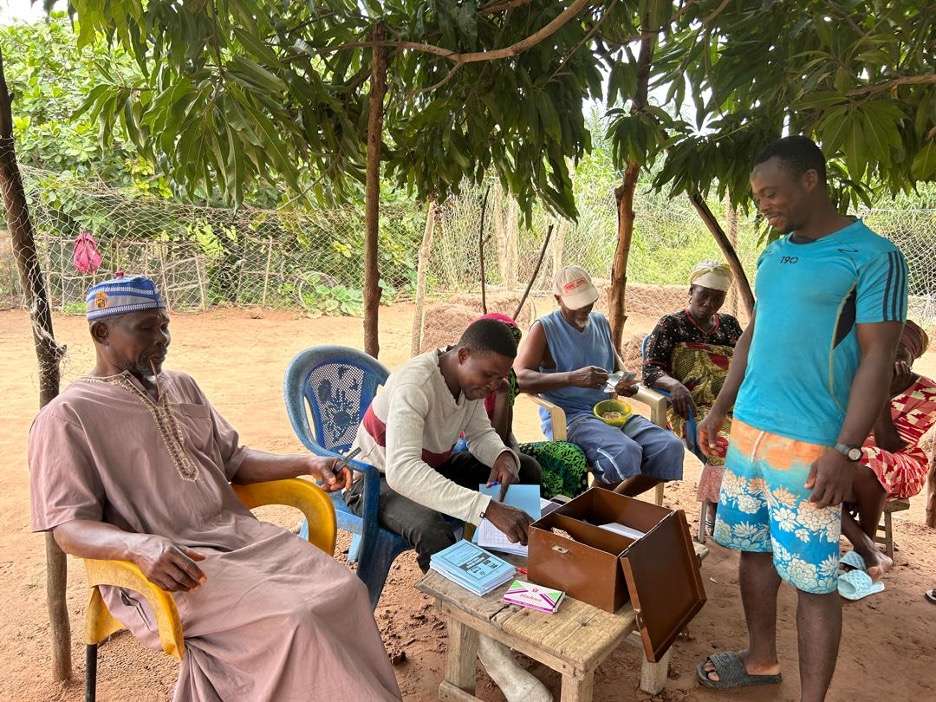
Mr Umar Nuhu, ADPO’s Programme Director, is helping the ‘Mmodinbo’ VSLA of Kodjobator to develop by-laws
The Afram Plains communities have seen meaningful progress since the introduction of sustainable beekeeping:
Simon Zaruggah from Kofinyinah reports improved pollination and increased cashew yields.
Aminu Salifu of Apesika built a new home from his beekeeping income.
Ernestina Boateng from Abomeserefo supports her children’s education and her husband’s business through honey sales.
Joyce Brebi of Nton-Aboma uses her beekeeping earnings to pay school fees and buy books for her children.
These inspiring stories highlight how beekeeping can transform lives.
Despite the success, project evaluations revealed a challenge — limited financial literacy among beekeepers. Each year, BfDG’s Honey and Beeswax Trade Centre purchases honeycombs from beekeepers, paying between GH₵500 (£29) and GH₵17,000 (£1,002) depending on quantity. However, many struggle to manage this income effectively. One beekeeper, Issaka Abubakari, asked after receiving his payment via the Mobile Honey Traceability System:
“What should I do with all this money?”
Others expressed interest in expanding their apiaries but lacked the capital and financial discipline to do so sustainably.
The 3 key holders of the Mmodinbo VSLA at Kodjobator are opening the VSLA box
To address these gaps, BfDG introduced the Village Savings and Loans Association (VSLA) model — a proven, community-based approach to financial empowerment. Each VSLA brings together 30 members to build financial skills and savings habits. Members:
Meet weekly to buy shares (personal savings) and contribute to a social fund for emergencies.
Access small loans monthly and repay them with minimal interest after three months.
Share the accumulated funds and interest after 52 weeks.
Each group is led by five core executives — Chairman, Recorder, Box Keeper, and two Money Counters — and three key holders who safeguard the VSLA box containing passbooks, records, constitution, and savings materials. Beyond finances, weekly meetings strengthen community ties, encouraging members to check in on each other and build mutual support systems.
The VSLA initiative is implemented in partnership with APDO, under the Bees Restore the Forest of Afram Plains Project, funded by the Darwin Initiative of the UK government. During a joint scoping visit to 22 project communities, BfDG and APDO identified the need to:
Establish a new VSLA in Kodjobator
Rectify irregularities in five existing VSLAs in the Kwahu Afram Plains
These six VSLAs will receive financial literacy training and loan fund support to enable members to start or expand their beekeeping operations — purchasing hives, bee suits, smokers, and other essential tools.
A member of the Mmodinbo VSLA at Kodjobator is buying weekly shares
The response from Kodjobator has been overwhelmingly positive. The newly formed ‘Mmodinbo’ VSLA began with 17 members and has already grown to 24 active participants.
“I am excited about this initiative,” said Issah Ibrahim.
“By the end of the year, I will earn enough from honey sales to buy land and building materials. This will help me make great progress in life.”
Hasmiew Ibrahim, Chairman of the association, added:
“I am grateful that my community is among the first to benefit. I will work hard to make this a success story.”
By combining beekeeping with financial literacy, BfDG is ensuring that income from honey leads to a lasting impact. The VSLA model not only strengthens economic resilience but also fosters cooperation, savings culture, and self-reliance among rural beekeepers. The buzz of progress continues — one hive, one saver, and one community at a time.
Money Counter 2 of the Mmodinbo VSLA at Kodjobator is counting the total amount of shares bought at the end of the weekly meeting
Other Stories
News
Beekeeping Income Inspires Others to Start Beekeeping in Kwahu Afram Plains
In the heart of the Kwahu Afram Plains, a quiet revolution is taking place—one hive at a time. For Felix Agbalenyo, a young resident of Kofinyina near Donkorkrom, the decision to start beekeeping has not only changed his life but is also inspiring others across the area to follow suit. Felix, who earns a living […]
Read Story →
News
Honey hunting to beekeeping: The story of Hawa Ibrahim, the best beekeeper in Kwahu Afram Plains
Hawa Ibrahim, a 52-year beekeeper who used to engage in honey hunting with her husband, lives in a small village [Kojorbator] on the fringe.
Read Story →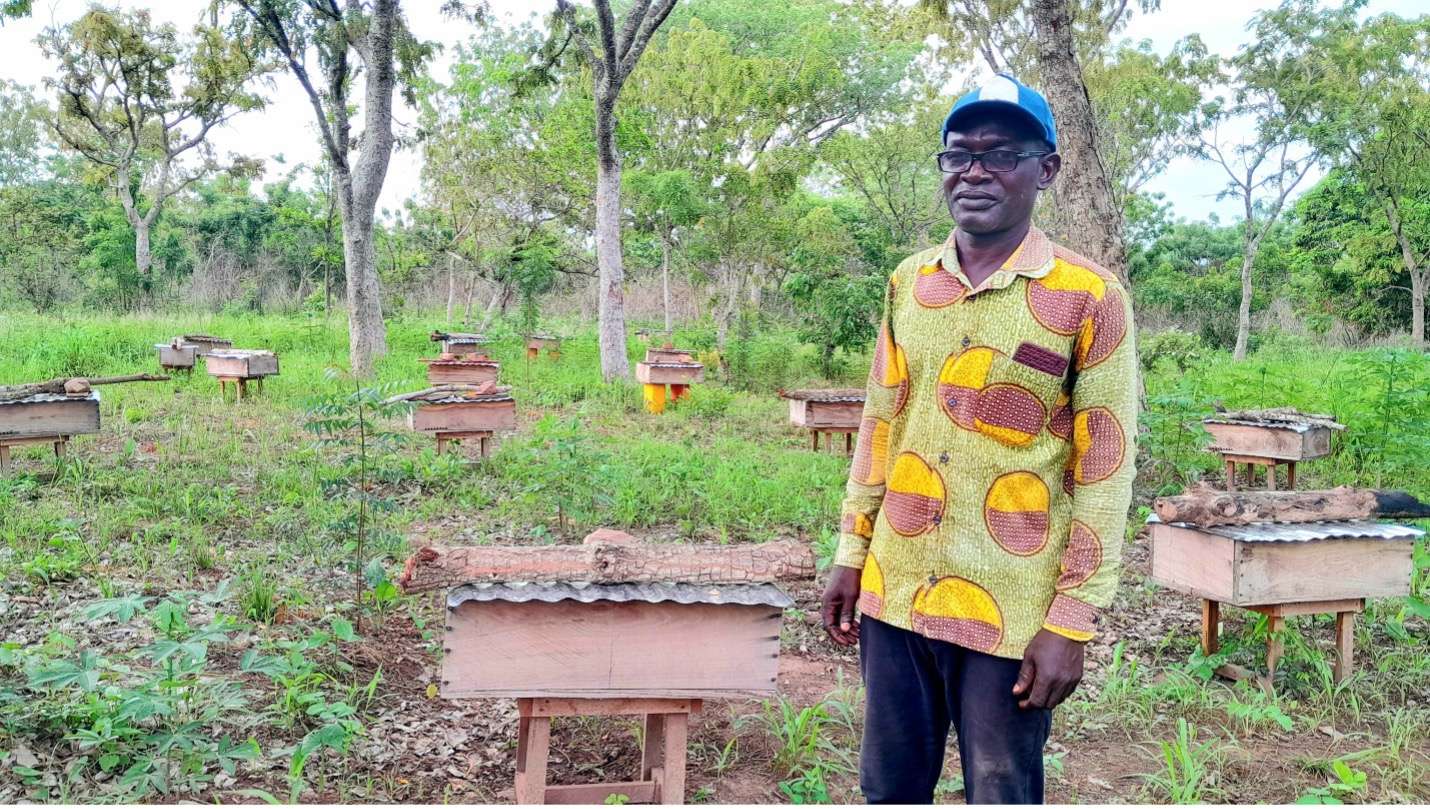
News
The Buzz Club Ghana Project: Inspiring Young Beekeepers and Conserving Biodiversity
Since 2015, Bees for Development Ghana has been implementing the Buzz Club Ghana Project, a unique initiative that empowers schoolchildren, teachers, and communities with knowledge and skills in beekeeping, pollination, and biodiversity conservation. Originally, the project aimed to support pupils in furthering their education in Senior High School and protecting the environment through beekeeping. However, […]
Read Story →